CASREM is an innovative energy optimisation project combining AI, IoT, and forecasting to improve energy use in agriculture and cold storage. Scene Connect supports data analysis, system deployment, and commercialisation, working with partners including Edinburgh Napier University to deliver a scalable, low-carbon energy management solution.
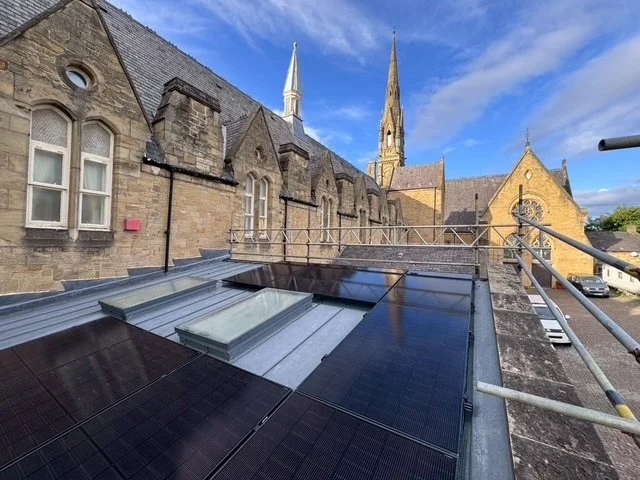
Scene designed and delivered solar PV schemes for the Dhammakaya Meditation Centre in London and Newcastle, securing planning permission on listed buildings. The projects combine rooftop and carport systems, generating clean energy, reducing costs and emissions, while carefully managing heritage constraints to enable sustainable, long-term community asset operation.
Scene Connect delivered a feasibility study for a ground-mounted solar PV project at St Cuthbert Wanderers FC, supplying power via private wire to a local Scottish Water Wastewater Treatment Works. The project creates long-term community income while overcoming grid constraints and supporting local decarbonisation.
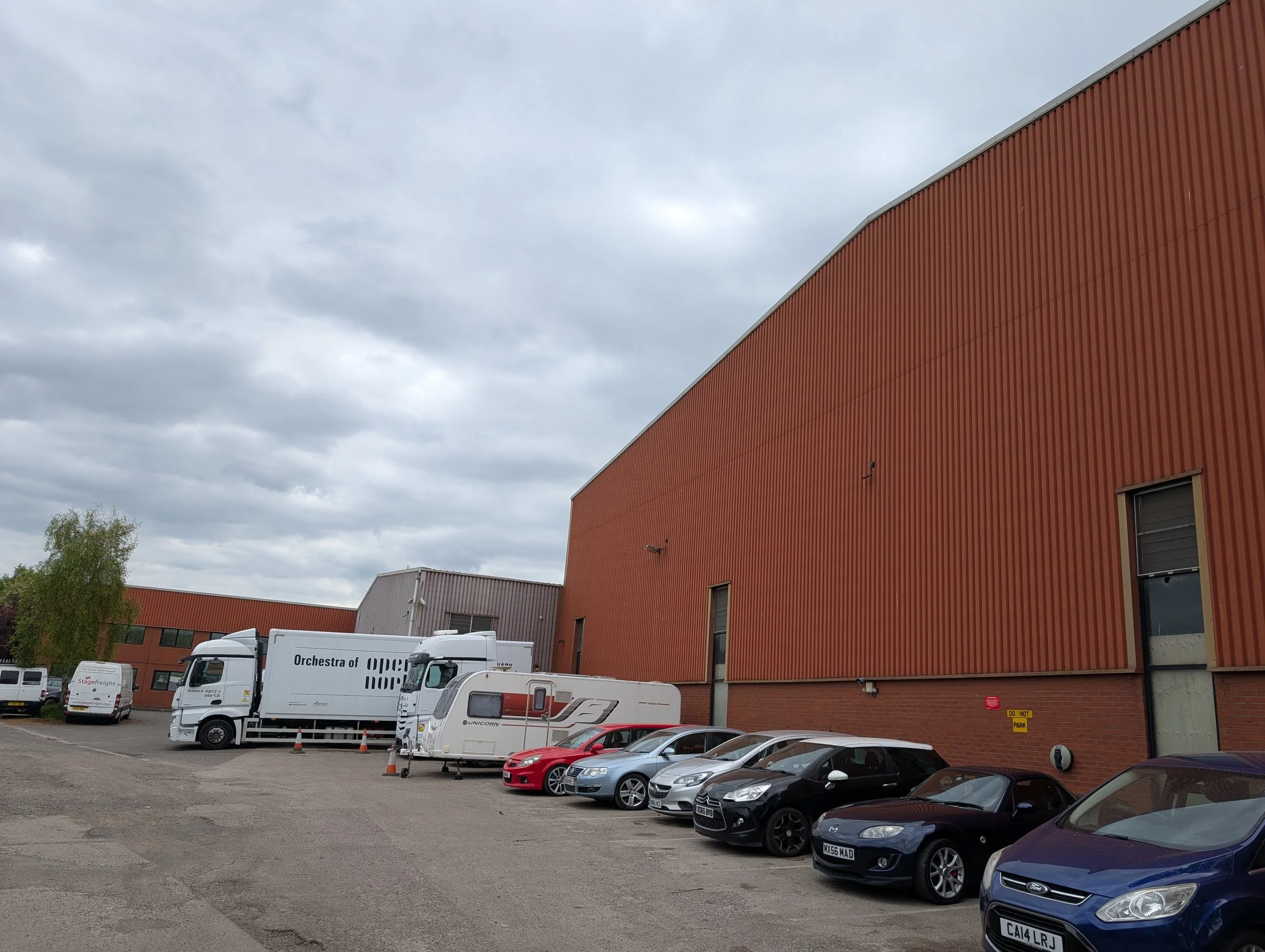
Scene Connect supported the SAIL Solar project, delivering a feasibility study for a community-owned rooftop PV scheme at Opera North. The project demonstrates how the arts sector can decarbonise, reduce costs, and generate long-term community benefit through innovative, locally owned renewable energy solutions.
Scene undertook a Phase 1 CEF study to assess the viabilty of community-owned solar at supermarkets across Merseyside. Rooftop PV developments at 9 locations were technically and financially viable. Financied via community share raises and contingent on securing supermarket support, community-owned installations could provide sizable energy bill savings, community revenue generation and local carbon emission reductions.
Scene undertook a Phase 1 GBCEF study to idenfity opportunities for rooftop PV development at four community-orientated sites across Luton, Bedfordshire. Whilst all four sites were viable, the two largest sits were recommended for development, based upon energy bill reduction, community revenue generation, carbon reduction, and social impact.
Scene conducted technical and financial appraisals for low carbon heating and generation opportunities at Hardwick Estate, South Oxfordshire. The estate is currently transitioning from private ownership to charitable status, representing a unique opportunity to enact community-led energy development. An energy club concept is preferred - combining energy generation and heat solutions to supply estate electrical and heat demand.
Scene contributed energy modelling of a new housing co-operative at Lowfield Green, York, with phase 1 being completed in 2025. Scene contributed to the Community Energy Fund project to calculate the savings and appropriate capacity for a shared photovoltaic generation and battery energy storage system. Scene consulted with the community to assess occupancy and usage patterns before conducting detailed appliance and building thermal modelling used to evaluate different PV and BESS sizing scenarios. The modelling opened up several funding routes with the community progressing the project to the implementation stage.
Funded by the Community Energy Fund, Scene conducted a feasibility assessment investigating the viability of developing low carbon heating and electricity generation in Clanfield, West Oxfordshire. The study comprised detailed technical and financial appraisals, as well as a review of the funding options and legal structures best suited to help the community of Clanfield progress their preferred developments.
Scene undertook a Phase 1 Community Energy Fund study to establish the viability of a communal heat network across five Quaker-owned properties in Yealand Conyers, Lancashire. Due to the site's low energy demand, communal heat systems are not financially viable. A building-specific air-source heat pump alongside a ground solar array solution was recommended.
Scene investigated the options for a low carbon energy system in Crick, West Northamptonshire. This involved detailed technical and financial appraisals across technologies for heat, electricity, and efficiency. Scene recommended a community investment programme in non-domestic rooftop solar, and a supportive programme to increase domestic installation of domestic air source heat pumps, rooftop solar PV, and efficiency upgrades.
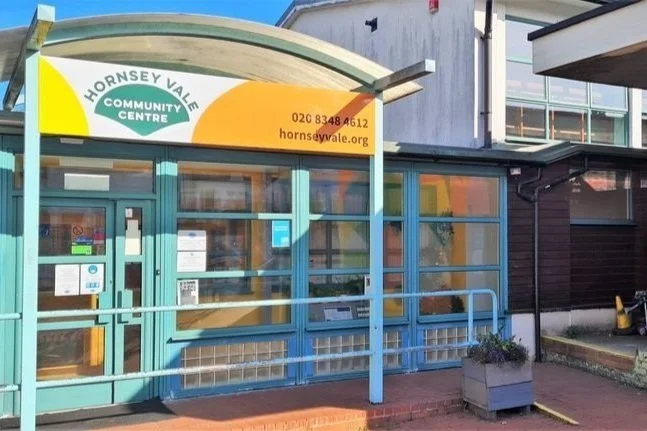
Scene led technical and financial appraisals for the development of a low carbon energy solution at Hornsey Community Centre, in North London. Building-specific solutions and local supply opportunities to a neighbouring housing trust and primary school were also considered. Following a programme of community engagement events, an investment case was provided.
Scene conducted a feasibility study on installing a low carbon solar energy system on a landfill site in Neston, in collaboration with Neston Community Energy (NCE) and Cheshire West and Chester council. The study was funded by the Community Energy Fund and sought to define the benefit of energy generation solutions for the local community as well as assessing the financial prospects of the proposed development.
Holy Island Community Energy and Energy Efficiency Feasibility Study was a low carbon project run by Holy Island 2050 (HI2050). The project is part funded by the UK Government through the UK Shared Prosperity Fund and the North East Combined Authority Investment Fund with the North East Combined Authority as the Lead Authority. The study was undertaken by Scene between October 2024 – February 2025 to understand the feasibility of community-led and owned energy systems on Holy Island and supporting energy efficiency and low carbon electricity generation measures.
Selkirk Regeneration, a Scottish Charitable Incorporated Organisation (SCIO), commissioned Scene Connect Ltd (Scene) to assess the feasibility of ground-mount solar PV development on land held in Common Good on the edge of Selkirk in the Scottish Borders.
Following a pre-feasibility assessment conducted in 2023, Scene support the Alt Housing Cooperative (AHC) to secure funding via the Community Energy Fund (Phase 2) from the UK Government. The funding supported detailed technical and financial analysis of low carbon heating, solar PV and retrofit solutions for AHC properties.